

Things to do in Mabira Forest – Entrance Fees and Ziplining
Mabira Forest is a dense rainforest found in the District of Buikwe. Buikwe lies between Jinja and Lugazi and covers an area of about 120 square miles. The forest reserve is situated 20 Kilometers away from Jinja and 54 Kilometers from Kampala. Mabira is home to about 311 species of trees with the forest center containing trees which are over 70 years old. The outer part of the forest consist of trees which are about 25 years old. This is result of illegal logging and clearings from communities living outside the forest. Before the forest became isolated in the late 1800’s, Mabira is believed to have extended without any interruption all the way to Central Africa. Mabira Forest is biologically diverse and a sanctuary to several animals and birds – some of which cannot be seen anywhere else on earth. That is why, 79 species of the birds in Mabira can only be found in Central Africa.
 Mabira is home to 219 butterfly species, 316 bird species and 97 of moths. Among the bird species are the Nahan’s Francolin and Papyrus Gonolek. The forest also has blue duikers, fruit bats, baboons, Bush pigs, the Tree Hyrax, Red Tailed Monkeys, Squirrels, Bushbuck, Grey Cheeked Mangabey, Bush Babies, Leopards (very rare) and various species of snakes. As a rain-forest, Mabira forest is an important water catchment area serving many streams and other water bodies like the River Nile, River Ssezibwa, Lake Victoria and Lake Kyoga. The Baganda (the dominant tribe) consider the forest of great cultural and historical significance. The Buganda god of food and rain is believed to live in Mabira forest. The forest has always provided medicine/herbs that are used to treat all kinds of ailment among the people living in the area and beyond.
Mabira became a protected forest reserve in Uganda in 1932. Before its protection, the forest was used to extract rubber while some parts were cleared to set up coffee plantations. As time went on (especially between 1971 and 1979), the forest resources were continually depleted due to poaching, logging and  encroachment by neighboring communities. Deforestation, encroachment and the setting up of sugar/tea plantations led to the loss of over 50 percent of the forest cover. With the return to peace in 1985, farmers illegally occupying the forest were expelled and reforestation programs were aggressively implemented by the government. Apart from the Uganda government, inter-governmental organizations and other Agencies did everything possible to restore the forest. They also promoted Eco-tourism to benefit the communities living in the outskirts of the forest.
Mabira Forest Giveaway
Mabira is surrounded by vast tea and Sugar plantations. In 2007, the government announced plans to clear about 30% of the forest to expand the sugar plantations owned the Mehta Group. Sugar Corporation of Uganda Limited (SCOUL) maintained that the expansion of the plantation would generate billions of Uganda shillings and create thousands of jobs. However, the public, politicians and environmentalists opposed this plan through massive demonstrations. The protestors feared that the forest giveaway would cost the country dearly by causing Lake Victoria to shrink. This would increase rate of climate change, soil erosion, lead to the extinction of rare forest wildlife and lead to the displacement of people. The Anglican church and King of Buganda even went as far as to offer alternate land if the plan was that urgent.
After continuous demonstrations, pressure, deaths of 3 demonstrators, burning of the sugar plantations and widespread calls for boycotting of SCOUL Sugar products, the plan was suspended. This was only for a while because in 2013, the government renewed its original plan of giving away the forest. The government used the excuse of a sugar crisis at the time. Once again, individuals, academics, local Agencies, religious and cultural 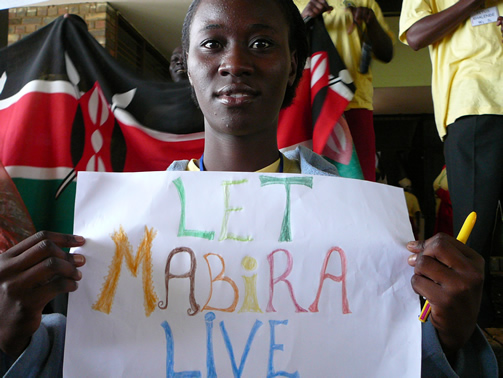 leaders protested against the renewed plans to give away the forest. This time they were even more organized and joined by international protestors/environmentalist from across the globe. They referred to the previous destruction of Namanve forest to create an Industrial parks that has not been a success because of the few industries to show. Other famous giveaways include include part of the beautiful forests in the Ssese Islands (Bugala Island) to BIDCO for palm oil production and Butamira Forest Reserve to Kakira Sugar Works Ltd despite a High Court ruling against it. The government even proposed to gazette Pian Upe Wildlife Reserve for agricultural purposes.
Back to Mabira forest. The government announced that it would identify land elsewhere for the project. The success of the demonstrations showed that citizens, politicians, civil society organizations and environmentalists can be powerful/influential in opposing government decisions that negatively impact on the environment in the future.
Mabira Forest Activities
 Mabira is a favorite destination for Tourists coming to Uganda primarily to visit forests. The key attractions in the forest are nature walks, cycling, birding, wildlife viewing, cultural encounters or simple relaxation and camping/picnics. Mabira forest is also a perfect place to learn about how natural resources and threatened species can be protected. The forest reserve can be explored using an extensive trail by foot, motorcycle or bicycle. All activities should start at the Mabira Eco-tourism Centre as you will learn from our 1 day tour of Jinja package.
Nature Walks: Nature walks in Mabira allow visitors to enjoy the tranquility and beautiful sounds of the forest. You can go into the forest on your own but the best experience is when you are led by a Guide who is knowledgeable about the forest. The Guide will help identify the ancient tree species, butterflies, 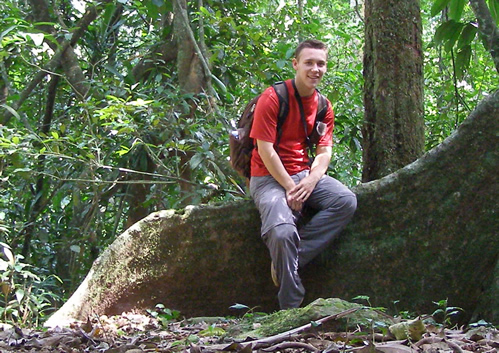 water bodies, plants, mammals and birds. The forest trails are divided into four including the Red trail (33km), Yellow Trail (12kms), (5km) and White Trail. It is possible to complete all the trails in one day by bike but most visitors choose one or two trails for a start. Mabira has over 312 species of trees that can be spotted while on the Nature walk. Among the tree species include Ugandanesis, Mililia Exclesa, Cordia Millenii and Warbughia.
Mountain Biking: Instead of walking through the complex trails, one can hire a mountain bike and complete all the trails in one day. Using a mountain bike will enable you to go beyond the forest and visit the surrounding communities. You will encounter primates, birds, giant trees and people along the way. The best bikes can be hired in Jinja but Griffin Falls camp also hires out bikes to its guests. The cost of  renting a bike is about 40,000 Uganda shillings.
Birdwatching: Mabira Forest Reserve is home to over 315 species of birds. It is therefore possible to spot 46% of Uganda’s birds in Mabira. Among the species to look out for are the Afep Pigeon, African Dwarf-kingfisher, African Pied Hornbill, African Shrike-flycatcher, Black-and-white-casqued Hornbill, Black-shouldered Nightjar, Blue-throated Roller, Cassin’s Hawk-eagle, Cassin’s Spinetail, Dusky Long-tailed Cuckoo, Forest Woodhoopoe, Green-breasted Pitta, Grey Parrot, Hairy-breasted Barbet, Nathan’s Francolin, Sabine’s Spinetail, Speckled Tinkerbird, White-bellied Kingfisher, White-spotted Flufftail, Yellow-billed Barbet, Yellow-spotted Barbet and the Yellow-throated Tinkerbird. Birdwatching in Mabira central forest is great because of the sheer density of birds. You don’t need to go too far into the forest to see the birds. The Grassland Trail is a favorite for birders. This trail passes through and area with several  fruiting trees which attract many of the forest birds. Since, it is a well-marked trail, birders can go alone but a Guide will make the experience more memorable by helping identifying the species from their sounds.
Ziplining (Forest Canopy): Mabira forest has one of the best Ziplines in East Africa. It is built to pass on top of the trees giving a clear view of the vast forest canopies. The equipment used is of international standards and was secured from the United States of America. A group of Volunteers from the Peace Corps helped put up the facility and then trained Ugandans on how to maintain it. Ziplining is arranged in the Morning and afternoon. The morning session starts at 8am ending at midday while the afternoon session is from 1pm going up to 6pm. Accessing the forest canopy allows you to see many of the forest creatures including birds, monkeys and squirrels.
 Tracking monkeys: The key attraction is the Uganda Mangabey Monkey which is sometimes known as the Lophocebus Ugandae. This primate is only found in Mabira forest, some parts of the country and in Tanzania. Sighting them depends entirely on the season of the year and availability of fruits. They tend to move a lot in search of fruits especially during periods of scarcity. Three groups have been habituated and open to tourism. Tracking the Uganda Mangabey Monkey is led by an experienced Guide who took part in the habituation process. Apart from the Uganda Mangabey Monkeys, you can also sight the red-tailed and Vervet Monkeys.
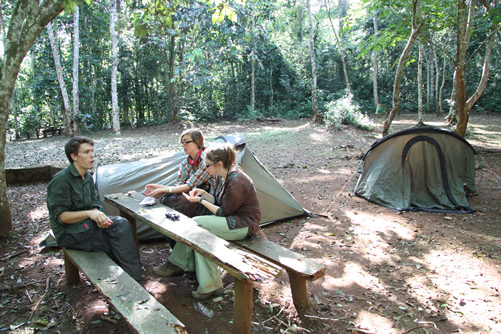 Other activities: Apart from primates viewing, nature walks, ziplining and birding, visitors to Mabira Central forest Reserve can choose to go for butterfly identification, visiting the Environmental Research centers or camping/picnics. The picnic grounds are well organized with all necessary facilities and food. There is a picnic trail which starts from the picnic site taking between 15 to 20 minutes through various forest streams and ancient trees. The hotels arrange for cultural dances and other forms of entertainment by the local people. You can also buy local art works as souvenirs if you are interested.
Accommodation in Mabira Forest
There is no shortage of accommodation facilities in and close to Mabira Central forest Reserve. Most of them are built to allow visitors experience the beautiful scenery in the forest.
Griffin Falls Camp (Mabira Forest Camp): Griffin Falls Camp is built on the edge of the trail leading to the the Griffins Falls. The camp is just 10 kilometers away from the Kampala to Jinja highway and is owned by the Mabira Forest Integrated Community Organization. Griffin Falls Camp is perfect for enjoying all that the beautiful forest has to offer. The camp offers good campsites with evening campfire and BBQ over the weekend. The staff at Griffins Falls Camp are very friendly and professional. Booking with this facility ensures that part of your money is used to finance projects within the communities living around Mabira Central Forest Reserve. While with the camp, you can learn about their projects with the community such as training people on tree planting, sanitation, education and HIV/AIDS.
 Mabira Rainforest Lodge: Mabira Forest Lodge was opened in 2007 and is built close to the Ecotourism Centre. It is arguably the best lodge in Mabira. The lodge is run by GeoLodges Uganda in collaboration with Silverback Lodge in Bwindi forest, Nile Safari Lodge in Murchison Falls National Park and Jacana Lodge in Queen Elizabeth National Park. The 15 Luxury cottages are spacious and built to take advantage of the beautiful scenery. There are 5 twin rooms and 7 double rooms. All rooms are self-contained with verandahs overlooking the magnificent forest. The lodge is a favorite for those who wish to spend the weekend in a quiet and serene environment but with great comfort. The lodge has a huge restaurant and two swimming pools. One is for residents and other for day visitors. The restaurant has a professional Chef who prepares both local and continental meals. Those who wish to go for massage and Sauna only need to ask. The Lodge also arranges for nature walks and birding for residents.
 Accommodation at the Mabira Forest Ecotourism Centre: The Centre provides bandas (thatched rooms) which offer privacy and comfort to visitors at an affordable rate. Each of the bandas has a private bathroom and a balcony. All the Bandas are built in shades with great views of the forest. Apart from the Bandas, the lodge has set up a campsite that can accommodate up to 12 tents. The site is set in a forest glade with its own bathing and latrine facilities. In case the rains are too heavy, an additional camp shelter has been established close to the campsite. Choosing to stay in the facilities at the Visitors information Centre comes with extra benefits. You can acquire local crafts and items like tourist maps, birding books, post cards and T-Shirts about Mabira forest.
Additional Things to know About Visiting Mabira forest
- As already noted earlier, the distance from Kampala city to the forest is about 56km. If there is no traffic, it takes about an hour to reach the forest. With traffic, the journey can take up to two hours. Those coming from Jinja can board a taxi heading to Lugazi and stop at the famous Najjembe market. The center of the forest is around this market.
- Mabira Central forest is open to visitors throughout the year. However, some activities are more suitable during certain periods of the year. Camping and picnics are better between in the dry season (December and February). Camping during the rainy season is possible but the weather can be very unpredictable.
- Regardless of which activity you plan on doing, endeavor to come prepared. A packing list for Mabira forest would include things like a camera, raincoat, a hut, hiking boots, binocular and insect repellents.
Wanyama james magero
September 21, 2020 at 11:52 amWe need to book for accommodation during a conference starting from 9th October to 10the October for 8 families. It should be full board.
Peter Fuuna
January 26, 2021 at 8:34 pmThanks for the great work and information
Pieter Wauters
December 18, 2022 at 6:58 amWe are living in Kampala and would like to organize a day-trip to Mabira Forest. What are the options and how do we organize? Thanks for your feedback. Best, Pieter Wauters.