

Things To Do in Juba and South Sudan
There are many things to do in South Sudan but endless civil wars have denied the world an opportunity to see what the country has to offer in terms of wildlife and culture. Just when the county seemed to be recovering after her independence in 2011, continued internal wars has slowed development in tourism and overall economy. Tourism in South Sudan currently contributes less than 4 percent to the country’s economy. The greatest challenges to improving the tourism sector apart from insecurity are a lack of enough marketing, few high quality accommodation facilities and few skilled staff to manage the sector. There is also the poor road networks, funding gaps and weak policies.
 For the country to tackle all the above challenges, civil wars must end. It is the endless civil wars in certain parts of the country that has played the largest part in keeping away foreigners from traveling to Juba or any of the remote towns. Moreover, most international media outlets are filled with negative news about the political situation in the country. Few of the foreign press highlight the positives or the fact that South Sudan has one of largest animal migrations in the world. Even fewer talk about the lakes, rivers, 14 national parks, national reserves, the world’s largest swamp (the Sudd) and probably the best birding site on earth. Few want to let the world know that some of the national parks in South Sudan are bigger in size to some of the countries in East Africa. The civil wars led to poaching in the national parks close to Juba but those in the remoter areas were left isolated with animal numbers said to have increased tenfold. Bad press aside, there are many who assume that what they see in Juba is all that the county has to offer. The best things about South Sudan are experienced in countryside. South Sudan’s wildlife and remarkable cultures remain isolated in the vast and remote wilderness waiting to be discovered with the help of a good local Guide.
What can the country do to improve things? In order for tourists to discover the country’s amazing tourism attractions, the country will need to work harder to build the necessary infrastructure and market the destinations aggressively. The road networks around the country are still below acceptable stands while more high quality hotels need to be built in the national parks to cater for both budget and luxury travelers. There are already positives on the ground. Juba International airport is expanding at a very fast rate and large companies from East Africa are establishing base in the capital. How will the country get the resources to improve things? South Sudan has vast mineral resources (especially oil) which can be exploited to develope infrastructure and tourism industry. It is just a matter of time.
 How safe is traveling to South Sudan at the moment? It is important to be flexible and open-minded when visiting a young country like South Sudan. Like the Democratic Republic of Congo, traveling to South Sudan or Juba may seem unsafe or even scary but the reality on the ground is very different. Juba and many of the larger cities/towns can be visited without any issues as long as you are with the right local guide. Many international expatriates work in Juba and even the remotest parts of the country without any major security incidences. The Capital Juba is particularly well protected and safe partly because of the large expatriate community and UN peacekeeping forces. This doesn’t mean that you should throw all caution to the wind while traveling to South Sudan. Before traveling to areas outside the capital, caution must be exercised. Consult your embassy about the latest security situation in the country whenever you are traveling to a particular location. Like we already mentioned earlier, you need to get a knowledgeable and reliable local Guide to move with you at all times. The Guide will help you deal with the political dynamics among the different competing partisan groups in the city and at the countryside. Don’t expect much in terms of quality infrastructure (hotel, roads etc.). Expect longer travel times and changes in plan because of the unpredictable security situation in some of the smaller towns outside Juba. Some travelers find unpredictability the thing that makes traveling to some countries exciting.
 What is the reward for going now and not waiting for later? The reward is discovering places only a few have ever set foot on. Sudan like the Democratic Republic of Congo offers adventurous travelers an opportunity to experience Africa as it used to be. By that we mean pristine wilderness, isolated and rare cultural groups that have not been affected by modern technology. You would be visiting places which will one day be so popular that you will be smiling (in your advanced age) knowing that you were among the very first to experience it.
Back to security. For those who want to do something different, love adventure and taking risks in order to experience something different, we don’t recommend that you wait until your local daily says yes for you to make a decision to visit South Sudan. The media should not hold you from discovering many of the amazing things about South Sudan. So which are the major tourist attractions in Juba and South Sudan? Before we continue with the attractions in Juba city, you might also find our article about the tourist sites in Mombasa interesting.
Tourist Attractions in South Sudan and Juba
Tour the capital Juba and other cities/towns: Juba is the capital of South Sudan and one of the fastest growing cities in Africa. It has good accommodation facilities and many others are being built. Juba International airport is becoming busier every year with direct flights from the Middle East and Africa’s major capitals. The roads within and outside the city are also getting better. Large multi-national companies have taken note of recent developments and established base to take advantage of the business opportunities available. Juba can be explored in a day or two and there are a number of interesting things to do while in the capital. Some of them will be covered as attractions of their own in later chapters.
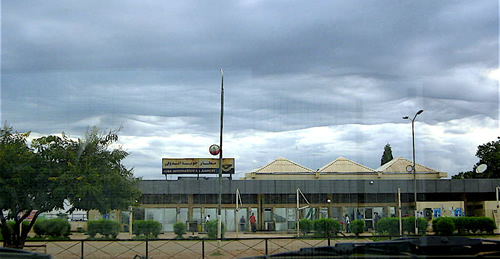 For those who enter the capital by road from Uganda or Congo, we recommend visiting Juba international airport. Then there is the University of Juba which is the largest public university in the country and worth visit. The University was founded in 1977 but was later relocated to Khartoum (Sudan) due to civil unrest in the 1980’s. Students are taught in English. After visiting the University, you can also stop at the new presidential palace which was opened in 2011, three months after the country got independence. Some parts of the palace are open to visitors but no photographs are allowed.
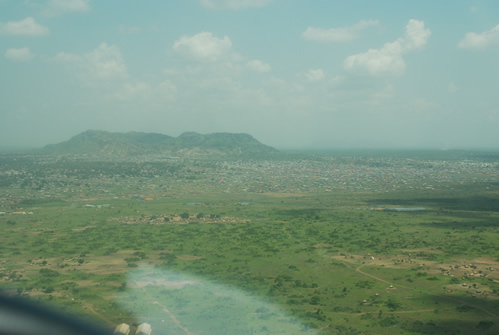 For the best view of the city, we recommend hiking to the top of Jebel Kujur Mountain. This mountain is only 684 meters high. Its original name was Korok but changed to Kuruk because a lot of folks used to visit the summit to perform rituals and other forms of witchcraft. You can also explore some of the old buildings from the colonial days or check out the monument in the middle of the main round about (where the main city clock is located). Juba’s largest market is known as Konyo Konyo. It is a very chaotic place but is arguably the best place to observe the local people gather in one place to buy vegetable, fruits and groceries.
If you want a safe place to drink or hangout in the evenings, we recommend that you go to a bar in one of the leading hotels. You might want to go to Logali House on Wednesday night for the recent blockbusters. Don’t walk in the night or carry any valuables while on the streets. A local guide will let you know that some places in the city are very insecure and should be avoided at all costs.
If you are on a comprehensive tour of the country, you might want to visit other major towns like Aweil, Kodok, Deim Zubeir, Bentui, Gondokoro, Tonj, Gongrial, Torit, Yambio, Rokon, Kaya, Yei, Wau and Rumbek (the former capital). Torit is where the first armed struggle begun in 1955. One can visit the burial ground of the first brave and patriotic men to give up their lives for the liberation of the people in South Sudan. The Mausoleum of Rev. Father Saturnino Ohure is also worth visiting while in Torit. The catholic priest died fighting alongside his people in the struggle for independence. If you happen to stop in Nimule, don’t forget to visit the famous Tamarind Tree. It is where the explorer Sir Samuel Baker rested while looking for the source of the Nile in 1869. The tree still exists to this day. Most of these towns can be accessed by air or the long and unpredictable roads.
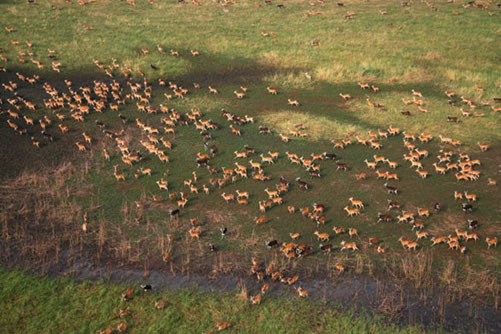 Boma National Park: Boma is one of the largest national parks in Africa. It covers an area of 22,800 square kilometers and is found in Jonglei State which is close to the border with Ethiopia. Between March to April and November to January, one of the world’s greatest wildlife migration occurs in the park. About two million animals (kobs, gazelle and other antelope species) move from the Sudds and Bandingilo National Park to Boma National Park. They end their migration in Ethiopia. The animal movement is dictated by the coming rains. During the dry months of November up to January, the animals move back again to enjoy fresh green pastures following the flooding of the river Nile. Boma National Park has over 7,000 elephants, baboons, giraffes and Oryx.
Bandingilo National Park: This national park is found in the Equatorial region of South Sudan and remains relatively undiscovered by tourists. It was established in 1992 and occupies an area slightly above 10,000 square kilometers. It is one of the most important national parks in South Sudan because it attracts the great wildlife migration. The park has incredible biodiversity and is home to giraffes, lions, leopards, cheetahs, gazelles, elephants and reedbuck. You should also read the article about activities in Dar es Salaam.
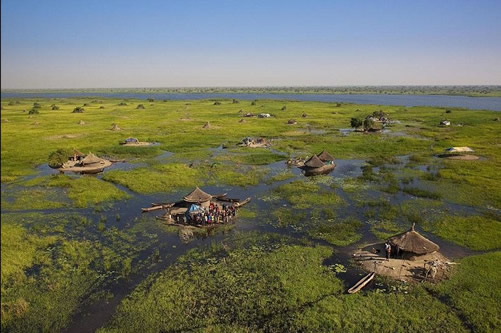
The Sudd: The Sudd is the largest swamp on earth and covers an area of about 30,000 square kilometers. Because there is constant water around the wetland, the soils are fertile hence supporting all kinds of vegetation, wild animals and birds. It is one of the best birding spots in the world. Over 450 species of birds can be found here including black-crowned cranes, giant white pelicans and shoebill storks. The Sudd is also excellent for fishing.
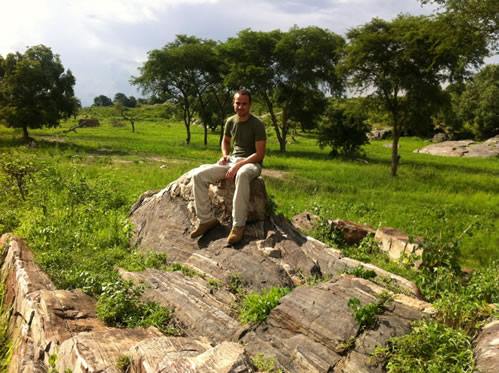 Nimule National Park: This national park was established in 1954 at the border with Uganda. It covers an area of about 540 square kilometers. It is easy to access and is a great place to stop if you are entering South Sudan from Uganda. Nimule National Park is relatively well developed because it is closer to the capital and is home to leopards, baboons, zebras, warthogs and several species of antelopes. The park has an office and rangers can be assigned to take you for a tour of the park or by boat to Opekoloe Island where you can see large herds of elephants and a few predators. Other animals in the park include hippos, zebras, crocodiles, leopards, warthogs, bushbucks, baboons, jackals, primates, hyrax and the Uganda kob. If you plan to visit Kenya in the near future, you might find the article about where to hangout in Nairobi of interest.
Wau Zoo: The Wau zoo is found close to a river in the state of Bahrel Ghazal. The key attraction at the zoo is the stripped hyena. Other wild animals in the zoo include antelopes, warthogs, crocodiles, ostriches and primates like baboons.
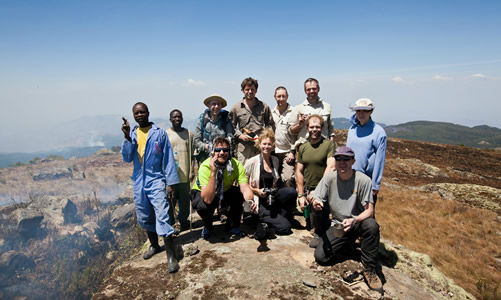 Mount Kinyeti and the Imatong Mountains: If you love climbing mountains, then you will find Mount Kinyeti a challenging hike. At 3,187m, Mount Kinyeti is South Sudan’s highest peak. It lies in the remote and rarely visited Imatong Mountains close to the border with Uganda. Climbing to the peak exposes one to pristine wilderness, forested slopes and an opportunity to see creatures like leopards, buffaloes or elephants which live in the Imatong Forest Reserve.
White Nile: As the river Nile starts its journey from Uganda, it passes through several countries before reaching the Mediterranean Sea in Egypt. One of those countries is South Sudan. The river Nile has two main tributaries known as the White Nile and the Blue Nile. The names came about because of the color of the waters. The Nile changes color here because of the clay soil. The White Nile passes through Juba offering tourists in the capital an opportunity to visit it without traveling long distances. A good idea is to visit the Juba bridge and observe the river from the top. You can spot fishermen and transport boats going about their daily business. The White Nile is relatively calm and smooth flowing.
Nyakuron Cultural Center: This is arguably the best place to go and experience the diverse culture of the people of South Sudan. The Nyakuron Cultural Center was built in 1976 to help showcase the cultural heritage of the people of Southern Sudan. Like most countries in Africa, the tribal groups in South Sudan value dancing, singing and storytelling as a way of demonstrating what is good about their culture. The Center is built with a large garden, a night club, an outdoor stage and an auditorium.
Whitewater rafting: And you thought whitewater rafting was only possible in Uganda? Well think twice. A whitewater rafting crew has been set up near Nimule giving adventurous travelers an opportunity to tackle the challenging Nile rapids from Nimule all the way to the capital Juba. The  whitewater rafting experience here is special considering that you will pass through areas with hippos, crocodiles, antelopes, primates and elephants. There are stops on the islands and calmer waters for sport fishing or birding. If you are in Juba for the weekend, you can book a whitewater rafting trip with a company called African rivers. They will pick you up from the capital and take you up to the Fola Falls in Nimule National Park. The activity starts early in the morning. The first eight kilometers are grade 4 rapids and can daunting for inexperienced rafters. After that, things get easier as the rapids change to grade 3 and 2.
Visit the John Garang Mausoleum: Garang was the highly respected former leader of South Sudan who died in a helicopter crash as he was coming back from a meeting in Uganda. He was the leader of the 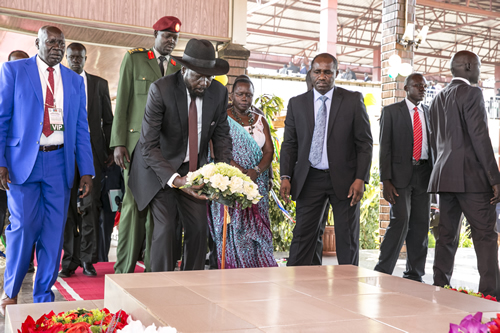 liberation movement which fought against the oppressive rule of the Sudanese government until the country gained independence. The Mausoleum is built at the Avenue of Nations which is where independence festivities are conducted. Visit the Mausoleum to pay homage to a leader who is considered the father of South Sudan. The facility is heavily guarded and you need to be courteous while signing the visitor’s books so that you are allowed entrance without any issues. The facility has a photo of the former president and flags of South Sudan. The actual tomb is heavily guarded and locked in a special enclosure.
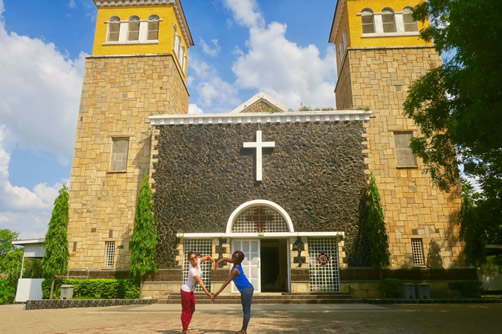 The All Saints Cathedral: This is the main Christian worship center in Juba. It is located between the Gombura and Lanya street. The Sunday prayers attract many of the influential people in Juba and can be an interesting place to be. There are three services on Sunday. One in English, Zande and Arabic. There are plans to build a much larger church that could accommodate the large numbers of worshipers.
Wau Cathedral: The Wau Catholic Cathedral was built in 1913 and is an  important symbol of the role of Christian missionary groups in the countries development. It is built with impressive architectural designs and contains rare glass windows and stone carvings that makes it stand out from the smaller churches in the area.
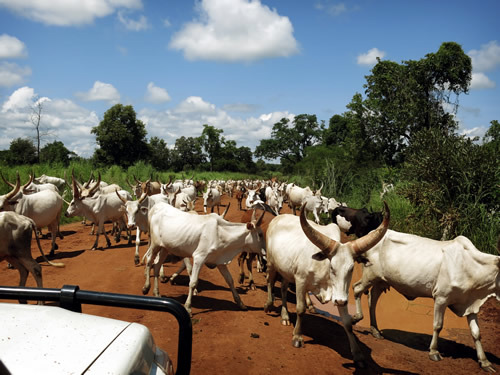
Visit a Dinka Cattle Camp or Cattle Market: The Dinka are the most influential and largest tribal group in South Sudan. Though many have moved to the capital and other administrative states, most remain 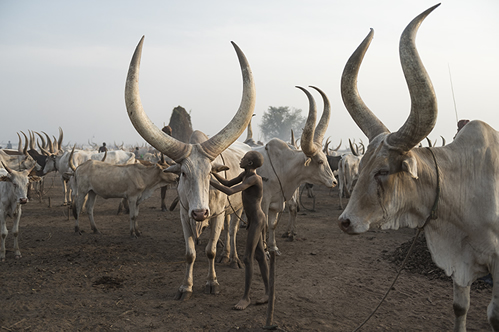 nomadic pastoralists. Cattle play an important role in determining the status of individuals and families. It is not unheard of for bride price to exceed 400 cattle. Their cattle camps can contain more than 600 head of cattle. Visiting one of the camps will give you an insight into a life centered around their animals. The cattle provide almost everything the owner would need to survive. If you are in Juba and cannot easily access the cattle camps outside the city, you can visit the cattle market at the city center to see animals being taken for sale. Cows are very symbolic in South Sudan and a fully grown long horned white bull is a sight to behold.
Watch Wrestling at Bor’s Freedom square: Wrestling is a traditional sport among many of the tribes in South Sudan. Participants remove their upper clothing and challenge each other for a duel in front of a large group of spectators. There is a price for the winners which can cost a sum or heads of cattle. To watch this, you need to go to the square on weekends.
Eat out: The large humanitarian and expatriate community in Juba has led to the establishment of some fine restaurants within the capital. There are both expensive and budget-friendly restaurants which remain open even in the evening. If you want to have more contact with the local people, you can visit one of the cheaper restaurants offering traditional foods. Which are the top restaurants in Juba? We should start with Da Vinci which serves international, Italian and vegetarian meals. There is also Notos Lounge Bar and Grill for Indian/Mediterranean foods. Spice ‘n Herbs is noted for their excellent Chinese, Italian and Indian dishes. You could also visit Home and Away for Asian foods. Il Paradiso and Juba Bridge Hotel Restaurant are the places to go if you are interested in African/Ethiopian food. For the best burgers, soups, pies, cakes and fresh salads, Le Bistro is one place you should visit. Other restaurants worth mentioning are Istanbul for Turkish and middle eastern cuisines or Villa Marvella for a quick snack on your way home after a long day of work.
Things to consider while visiting Juba and South Sudan
Expensive Travel: Traveling within South Sudan is expensive compared to neighboring countries. This is mainly because of the scarcity of basic commodities. It is important to travel with enough physical cash because transactions by credit card are only possible in Juba and a few of the larger towns. Dollars are accepted but you would also need notes in the local South Sudanese pound. A Visa and valid passport is important when entering and traveling to the different towns in South Sudan. Expect to be stopped at several check points and road blocks.
Friendly People: Despite the decades of civil war and less contact with foreigners, South Sudanese are generally very friendly. You can use their friendliness to foreigners as an opportunity to learn a lot about the country and its internal dynamics without coming across as too inquisitive.
The Climate: South Sudan has a tropical climate with periods of heavy rainfall followed by dry spells. Some parts of the country receive more of the rain and heat but generally, the rainy season occurs in the months of April to October. Areas in higher altitude receive more rainfall compared to the flatter zones. It is also important to note that because of her proximity to the equator, the days and nights are of the same length.
Best time to visit: Considering that that the country experiences both wet and dry months, it is better to visit during the dry season which fall between November and April. The poor road network in the countryside makes traveling during the rainy season very challenging. The roads are mud-filled while rivers get flooded. This is sad considering that this is the time when the landscape becomes green and beautiful. The wildlife migration from the Sudd to Boma National Park occur between March and April. If you want to see the animals moving back to the Sudd, then you should visit between November and late December.
Taking Photos: As innocent as it may look, local authorities and the army in particular will not tolerate those who take photos of public buildings. Juba has arguably the strictest policy about taking photos. You could even be arrested or go to prison if caught taking photos without permission and a government official to accompany you. Avoid taking photos of national buildings or military establishments. A local Guide can help you get the required permission. As you get outside the capital, you can take as many photos as you wish.
Tribal Tensions: The root cause of some of South Sudan’s problems are tribal in nature. It is important not to get caught in the mix or appear to be siding with one particular tribe even if you have strong reasons to do so. Handle tribal conversations diplomatically and if possible, let the locals lead any conversations with tribal sentiments.
Medical facilities: The prolonged insecurity in some parts of South Sudan has driven away many insurance companies and yet it is important to get travel insurance before traveling. The insurance should cover any potential evacuations and treatment in a neighboring country. Look for insurance companies that cover travels to high-risk countries. The medical facilities are not up to international standards except for a few run by government and international organizations.
Transport within the capital and towns: The best way to move around the capital Juba and smaller towns is by using a boda (motor cycle taxi). Taxis are best for long distance travel and cannot take you to the hidden parts of town. Get a boda rider and ask him to take you for a city tour.
Accommodation and hotels in Juba South Sudan
 If you are in Juba and wondering where to stay, then you should read the following section. There is no ultra-luxury hotel in Juba yet but the ones in the city are good enough to provide decent services. Most of them offer budget, mid-range and Luxury rooms that are self-contained. Some of the best hotels are Crown Hotel and Pyramid Continental Hotel. Lets look at three of the most popular ones:
Hotel VIP: Hotel VIP is one of the newer hotels in Juba. It is built along one of the busy streets and has a restaurant, bar and wireless internet that can be accessed from all rooms. Other amenities in the hotel include a massage and hair-dressing section. Hotel VIP has better facilities than most of the hotels in the capital. Most of the staff are Ethiopian including those working at the massage parlor. In the evening, there are Ethiopian dancers to entertain guests as well as live music. Rooms go for about $150 a night including breakfast.
Hotel Nile Resort: Nile Resort is one of the older hotels Juba. Like the name suggests, the resort is built close to the White Nile hence offering beautiful views of the river. The resort has free Wi-Fi in all the rooms as well as a bar. The restaurant serves Indian bread, chapatti and rice. Live music is played over the weekend as guests enjoy some of the local beer and drinks from all over the world. A single room costs about $100 while doubles costs around $150. The Resort allows guests to rent a whole self-contained room for a month at a special price. Backpackers who are traveling on a budget can set up tents at the hotel promises.
Hotel ECS Guest House: For those who don’t want the more expensive hotels and need something simple, Hotel ECS Guest House is worth checking out. This Guest House is built close to the All Saints Cathedral. It is one of the cheapest hotels in Juba. Rooms cost $50 per person excluding breakfast which can be arranged at a fee. The Guest House has a restaurant which prepares both continental and local Sudanese dishes on request.
namakaisland@gmail.com
September 16, 2020 at 5:14 pmI give standing ovation to the writer. Thank you so much for the wonderful information. I am a tour guide in Uganda and looking forward to know more about South Sudan. Thanks. Fred
Samuel Deng Deng
January 11, 2022 at 8:09 amIt’s a good idea to make Visitors to the country aware about them for easy accessibility without struggling. Proud of the development in the country. Thank so much.
BomaHills Tourism Limited
January 11, 2022 at 8:32 amThis is a great article. It has clearly summarized the nature of South Sudan tourism. As we speak there are less than 100 travel companies in country considering the tourism opportunities the country has. This is something we seriously need to improve on. We can proudly say as BomaHills Tourism that we have successfully conducted over 10 tours in the past 1 year (2021). We also just came back from a tour of Imatong mountains last week( 31/12/2021), a first of the kind in many years.
Ladu Stephen Apollo
January 11, 2022 at 11:17 amI love touring because I studied History and Geography at Juba University. I continue getting to know new places.
Mareng
January 11, 2022 at 11:57 amThanks to the author.
Omondi Ouma Abuogi
January 11, 2022 at 2:19 pmThanks for telling the world the truth about South Sudan that the mainstream ‘controlled’ big media houses won’t tell as ‘it is’.
Deng Martin Deel
January 11, 2022 at 8:25 pmWonderful Insight and tour guide. Keep it up and come up with more content. Eastern Equatoria and Jonglei states are two best Tourist destinations in South Sudan.
Jackline John Bage
January 11, 2022 at 10:06 pmThis is much needed for a young nation like south Sudan. Kudos to the writer.
Jackline John Bage
January 11, 2022 at 10:07 pmCould this be shared on email
Jonathan Buule Aloro
February 4, 2022 at 3:33 pmSouth Sudan. My sweet African home.
Bomasafaris
February 8, 2022 at 5:32 pmThank you for writing about South Sudan and it’s tourist attractions.
At Bomasafaris, we ensure that you live true moments by traveling unexploited terrains. We deliver the best and take you to destinations you never thought existed.
Contact us on bomasafaris@gmail.com
Isaac Lotwal
August 3, 2022 at 2:21 pmVery impressive information about our tourists destinations. We appreciate your effort to collect the right information about South Sudan.
Nunu Lillian Chol
July 10, 2023 at 1:39 pmThis is a very impressive message about South Sudan. South Sudan is indeed a peaceful country and has a lot to show the world. We welcome our neighboring countries and the rest of the world to visit our motherland. I work for a Travel and Tour Company in South Sudan Juba. We are located in Sadeco Center, Air Port Road. The Company Name is Muthaiga Travel Ltd.
Data Samuel
September 10, 2023 at 12:53 pmThe fact is that the world knows nothing about South Sudan apart from the civil unrest that even a 5 year old child from Brasil can tell. The national government has a lot to do in order to maintain stability because this will be the only gate way to the prosperity of South Sudan’s tourism industry.
David Agootson
May 30, 2024 at 9:51 amI would like to visit all these places one day and especially Boma National Park.
Fail
August 11, 2024 at 4:23 amA well articulated article that gives first hand information about South Sudan. We need more of this kinds of advocacy regarding South Sudan. Thanks and well done.