

Difference and Similarities Between Gorillas and Chimpanzees
Anyone planning to observe wild primates in Africa will at some point wonder what differences they will experience when they encounter the different species. This is particularly so when their tour involves observing Gorillas and chimpanzees. Many confuse gorillas and chimpanzees and it’s important to examine what makes them different. Both gorillas and chimpanzees belong to the Hominidae family. They are classified as great apes along with humans, orangutans and bonobos. Gorillas and Chimps are mainly found in the equatorial belt of Africa but their habitat, range and density differ considerably.
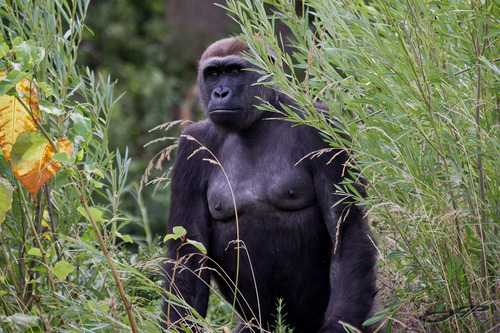 This article centers around the differences between gorillas and Chimpanzees. As we will discuss later, a key difference between the two primates is that gorillas operate in more cohesive ground-based family groups. Chimpanzees on the other hand form more dynamic, multi-male communities with complex social rules. Gorillas are strictly vegetarian but chimps have been observed eating meat and practicing cannibalism.
This article will explore the above differences in more detail and introduce other genetic, behavioral and physical differences that one needs to bare in mind before encountering the primates in the wild. You might be interested in Colobus Monkeys or the beautiful golden monkeys of Africa.
Differences between Gorillas and Chimpanzees
Classification and Taxonomy: As earlier noted, Gorillas and chimpanzees are both members of the original Hominidae biological family. Bonobos, Orangutans and humans all belong to this group. The evolutionary branches of gorillas and chimps changed significantly in time. Gorillas now belong to the 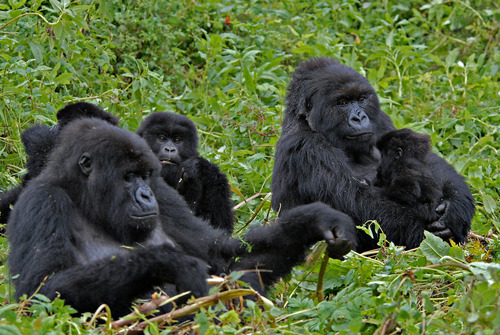 genus Gorilla which is divided into two different species – the western gorilla (Gorilla Gorilla) and eastern gorilla (Gorilla beringei). Each of these gorilla species is further divided into two subspecies. The western gorilla is divided into two subspecies – the western lowland gorilla and the Cross River gorilla (Gorilla gorilla diehli). The Eastern gorilla is divided into two subspecies – the Mountain gorilla (Gorilla beringei beringei) and the Eastern Lowland Gorilla (Gorilla beringei graueri).
Mountain gorillas are found in the Virunga Massif which include Bwindi, Mgahinga, Virunga and the Volcanoes National Park. Western Lowland Gorillas live in Cameroon, the Republic of Congo and Gabon. Eastern Lowland gorillas can be found in the Democratic Republic of Congo while the Cross River Gorilla calls Nigeria and Cameroon home. Its important to note that Mountain gorillas generally live in areas of higher altitude with cooler climates. The Western lowland gorilla is comfortable in lowland forests with wet conditions (rivers).
How about chimpanzees? Chimpanzees belong to the genus Pan and are generally found in 21 countries. Strong populations are in Guinea, Tanzania and Uganda. The Pan genus consists of two Species – 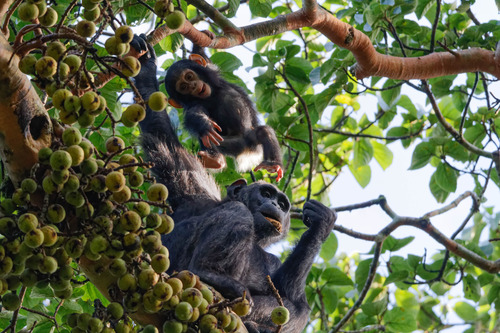 Bonobos and the common chimpanzee (Pan troglodytes). Four sub-species of the common chimpanzee have been recognized. They include the Central Chimpanzee, the Western Chimpanzee, the Eastern Chimpanzee and the Nigeria-Cameroon chimpanzee. These four recognized sub-species of the common chimpanzee differ in regard to vocal patterns, tool use, behavior and morphology.
Primatologists have confirmed that humans have a closer genetic relationship with chimpanzees than with gorillas. The genome-level between Chimpanzees and humans is 98.7 percent. These DNA sequencing results was published by the Human Genome Project in 2005.
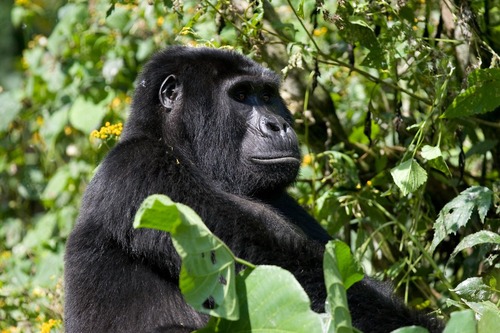
Presence and Facial Features: Compared to a chimpanzee, there is a certain consistency in a gorilla’s facial expression. A gorilla changes face or direction once in a while. When you look at a gorilla 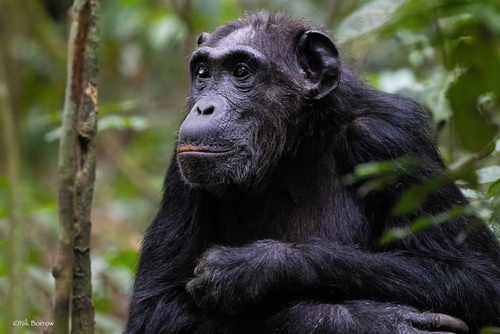 closely, you will notice deep-set eyes, a large nostril and flat/wide muzzle. They have a stronger eye contact which can appear charged. Whereas a gorilla’s facial expression is consistent/stable, chimps are more expressive. Their faces are more exposed and shift constantly. Chimps are always on alert compared to the calm demeanor observed with gorillas. Chimpanzee ears, eye brows and lips move more (dynamic) as they relate within a community. Chimpanzees are also more playful but this can quickly turn into violent screams without warning.
Body Build, Mass and Movement: A mature silverback gorilla has presence and can weigh between 140 to 190 kilograms. He has a much broader chest compared to the females. Females are noticeably 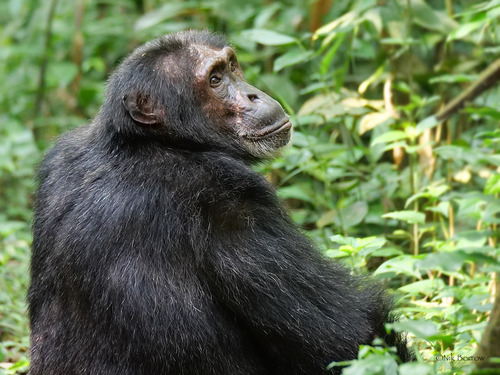 smaller in size weighing about 100 kilograms. The upper body of a gorilla has much of their power. They also have thick forearms and strong shoulders which are a result of spending most of their time moving on the ground.
Chimpanzees are also strong but with a smaller body. A male chimp weighs between 40 to 60 kilograms when in the wild. Though not as heavy as gorillas, chimps have remarkable muscle density. A chimpanzee is 3 times more powerful than a human of the same weight. A chimp’s limbs are longer compared to their torso and their long arms support their movements in trees. These longer arms and limbs allow chimps to climb trees with a level of fluidity not matched by gorillas.
 Gorillas move in a slow and deliberate way because of their weight. They might appear uncomfortable when moving in narrow trails or steep inclines. Juveniles climb trees more frequently to play or reach for food while adults spend most of their time on the ground. Adults will only climb trees to rest or reach out for irresistible juicy fruits. Chimps spend most of their time on top of trees but will climb down to forage on clearings. They can easily swing from tree to tree or hold onto a tree with one arm. Observing gorillas and taking photos is much easier compared to chimpanzees. Gorillas are generally found on the ground while chimps may spend most of their time up the trees. This important difference makes gorilla trekking generally more rewarding than chimpanzee trekking.
Sexual difference between males and Females: A female and male gorilla are distinct. The male has a larger chest and jaw muscles. The greatest distinction is perhaps the silver lining at the back of the male that gives it the name silverback. Everything about a silverback gorilla indicates complete control 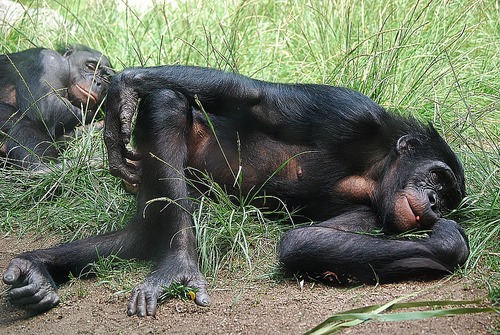 over the group. They behave, move and grunt to indicate total dominance over his group. The silverback rarely leaves his family to wander without him.
The difference between a male Chimpanzee and female is less dramatic. The male chimp is still dominant but doesn’t have total control over his group. Females may create alliances and are not always loyal to the dominant chimp. He is in constant battle to remain on top of the group. His era of dominance is often short because of the nature of chimpanzee groups. In fact, chimpanzee groups often split to feed separately for a while before regrouping after a few days. By the time they get back together, a lot would have changed. Females may choose to mate with other males in the group whenever a chance arises. This behavior has been recorded in some gorilla families but is less prevalent.
Social Structure: Chimpanzees live in looser families as discussed earlier. Groups can split for days and rejoin later. These splits are generally because of scarcity of food or conflicts. The dominant chimp has no complete control of the group. He exercises dominance through creating alliances and taking 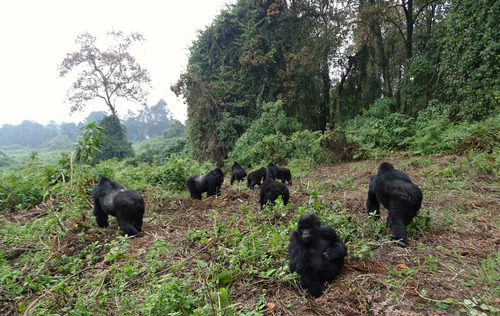 advantage of group politics. He has to keep working to maintain his status. He may even get desperate to the point of wining favor by grooming the females. All these actions may not be enough as females may leave him for other males offering more security.
Gorilla families are always led by one dominant Silverback. He ensures that there is cohesion in the group. He is the decision-maker and protector. He determines when to move, where to feed and where to rest. Younger males are allowed to live with the family for some time until they leave to start their own families. A silverback could lose his family as he grows older, weak and can no longer defend against males from other groups.
Aging: As gorillas age, they show signs of stiffness in their body joints. Grey hair can be seen around the 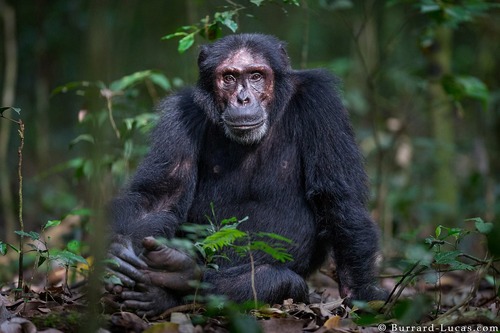 face and arms. They move more slowly and rest for prolonged periods compared to other group members. When the dominant silverback ages, he becomes vulnerable to challenges from outside males who may attempt a group takeover. A chimp’s face will start to grow patchier or darker as it ages. Dominant males may remain with the group even after losing status. In fact, they could retain much of their status by creating alliances or accepting the authority of stronger and younger males. You can identify older chimps by looking out for any abnormalities in movement or missing body parts.
Cooperation and Intelligence: Based on observations, chimpanzees are generally considered to be more intelligent. Gorillas may be considered to be wiser when you take into consideration how stable 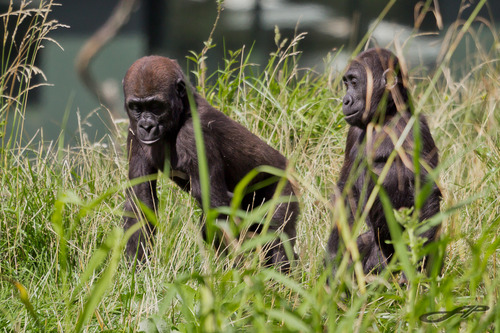 their groups are. Why are chimpanzees considered to be more intelligent? Chimps are able to use different types of tools. They will adapt a particular tool, teach others and refine their use. Chimpanzees in Gombe have been observed fishing out termites from mounds using twigs. They have also been observed cracking nuts using stone hammers in Guinea (Bossou) and collecting water from hollow trees using sponges made out of chewed leaves. These abilities are then taught to juveniles.
Gorillas do not use tools as frequently as chimps. This might be because they generally live in areas with plenty of food. Chimps are more widespread and have to learn to adopt to areas with less to feed on. That said, western lowland gorillas in Nouabalé-Ndoki National Park have been observed estimating the depth of swamps using sticks before crossing. An individual was recording placing a log across a swamp to cross.
How about cooperation and social Intelligence? Chimpanzee communities operate on politics. Coalitions are formed and broken depending on the prevailing circumstance. As earlier noted, the dominant male maintains power by creating alliances and not through force alone. Females may mate with several males 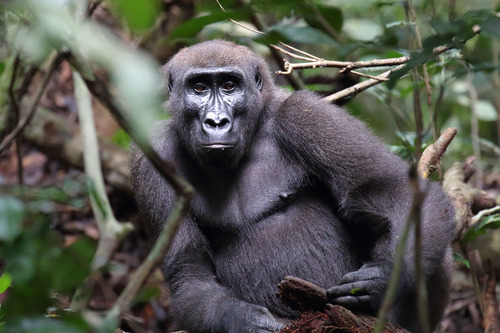 in exchange for protection and food. Grooming is very common in chimpanzee groups to maintain hygiene and cement alliances. Adult male chimpanzees are always testing the authority of the dominant one. They will watch out for any weaknesses and initiate takeovers which are often temporal.
Everything done in a gorilla family is centered around the silverback. He determines when to feed, rest or move. His authority comes from his size, charisma and calm demeanor. There is no need for chaos but he will show strength when members of the group go out of order occasionally. Although female gorillas appear submissive, they influence group dynamics but in a subtler way compared to chimps. Young males (blackbacks) if allowed in the group do not challenge the silverback until they reach maturity. When that happens, they are often driven out to start their own families.
Expression and Communication: Gorillas do most of their communication using body movement. They will hoot, grunt, rumble or beat their chest to communicate something. Chest-beating can be a 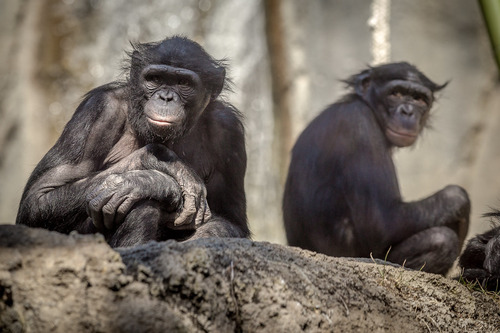 simple display, a sign of excitement or arrival in the vicinity and is not always a sign of danger. The Silverback will use low vocalization to coordinate the next move of the group or to keep others in check.
Chimpanzees use more layered communication systems. They have been observed holding hands during grooming to build trust. Chimp communication is characterized by the use of facial cues, gestures and postures. Loud screams, hooting and pants are the order of the day in large chimpanzee communities. When there is a fight between two individuals, the loser might scream loudly to call for help from allies.
Emotion, Learning and Memory: Both gorillas and chimps show strong memory, learning ability 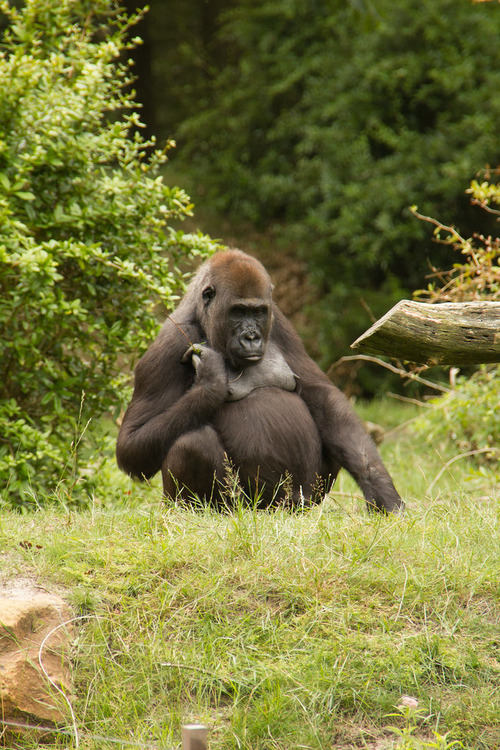 and emotions. Gorillas show emotion in many ways. They will stay close to injured family members, distressed infants or visit spots where a family member died.
Chimps and gorillas both remember individual faces, the best feeding spots and social hierarchies. As noted earlier, chimps show more intelligence. In captivity, their intelligence levels have been found to match that of children. They can read situations and anticipate outcomes in group politics which enable them design strategies to survive.
Conservation Status: The different species of gorillas and chimps are of conservation concern and under pressure. Of all the gorilla subspecies, Western lowland gorillas have the highest populations. It is believed that over 250,000 remain in the wild. However, most live in very remote areas with poor infrastructure making it very difficult to monitor their populations. Some populations have not been revisited for years. Moreover, poachers target Western lowland for bush meat while at the same time their habitat is threating by mining and logging. Their survival will depend on efforts by the political leaderships in Gabon, Cameroon and the Republic of Congo.
About 1000 mountain gorillas still roam the forests of Uganda, Rwanda and the Democratic Republic of Congo. IUCN has listed them as endangered. Whereas most Western Lowland gorillas are not monitored, almost all mountain gorillas are closely followed by Park Rangers, Researchers and  Veterinary teams. Tourist can easily visit/access habituated mountain gorilla families hence ensuring that funding and global attention towards them is raised. How about Eastern Lowland Gorillas and the Cross-River Gorilla? All these subspecies are endangered. About 7500 Eastern Lowland gorillas remain in the wild while less than 300 Cross River gorillas survive.
Chimpanzees are still found in large numbers in Africa but have also been classified as endangered because of their declining populations. Chimps are endangered because they live closer to human populations. They have suffered from habitat lost due to agricultural expansions, illegal logging and mining. They are also victims of pet trade and poaching for meat. Given that gorillas and chimps are found in developing countries with poor infrastructure, the only hope is tourism. The money generated from tourism encourages communities and even the governments to do everything possible to protect the primates. Whereas tourism plays a stabilizing role, it could be a time bomb in waiting. A sick tourist could easily infect a particular group with devastating results.