

Grumeti River Crossing
The Grumeti River is found in the Mara region of Tanzania’s Serengeti National Park. It is 80 kilometers long and enters the Serengeti from the east, then flows across the Ikorongo and Grumeti Game Reserves. It finally powers its waters into Lake Victoria. Crossing the Grumeti river is one of the greatest challenges wildebeest and other herbivores must face during their annual great migration between the Serengeti and the Masai Maraa National Reserve in Kenya. The Grumeti River crossing is one of the most 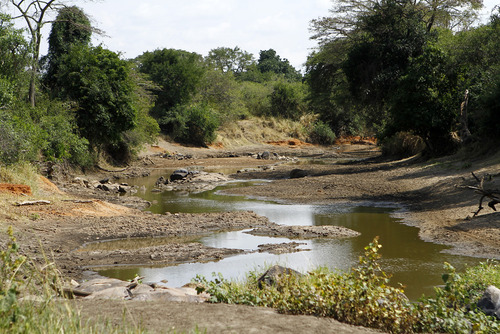 spectacular wildlife events in the western Serengeti and contributes to making Tanzania a great tourism destination. It involves the movement of hundreds of thousands of migratory herbivores (wildebeest, zebra, topi, eland and other antelopes) and takes place during a defined seasonal window. This crossing occurs during May, June and early July. This is the time when the rains disappear from southeastern Serengeti leading to poor pastures.
Herd movements start from central Serengeti (Seronera region), then to the west and eventually north towards the river. By the time the animals reach River Grumeti, limited forage and pressure from trailing predators forces them to make the decision to cross the crocodile infested river. Not all crossing result in 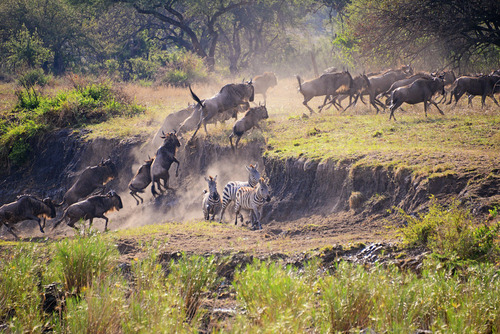 crocodile encounters. In fact, most of the herbivores calmly enter the waters and cross without any attacks. Groups that choose the wrong part of the river have to deal with strong currents or come face to face with hungry Nile crocodiles. A group may hesitate for hours but as more and more animals congregate at the river bank, they are pushed/forced to cross even against their will.
Which animals are involved during the Grumeti River Crossing? As earlier mentioned, the main species participating in this mass crossing are wildebeest, zebras, eland and topi. Zebras often move ahead as pace setters but wildebeest form the largest migrating herd. Wildebeest are more prone to pressure and reactionary crossing. Their large numbers creates congestion which can only be avoided by crossing. Topi, Eland and Zebra approach the river more cautiously because they move in smaller groups.
Note: It is important to note that the crossing occurs as part of the wider Serengeti-Mara migration. This wider migration involves the movement of about 1.7 million wildebeest, 245,000 zebra and 512,00 Grant’s gazelles. These numbers are estimates from the Serengeti Biodiversity Program working in partnership with the Frankfurt Zoological Society. You might want to read about how to join hot Air balloon trips in Serengeti National Park to view the River crossing.
Before, during and Crossing the River Grumeti
Before crossing the Grumeti River, herds may take hours or days close to the river. They first cluster in the river edges or open plains. As more and more animals arrive, they create pressure that forces those at the riverine age to cross. Once the animals begin to cross, they might encounter shallow or deep waters depending on the section of the river. Wildebeest, Zebras, topi and Eland are all good swimmers. 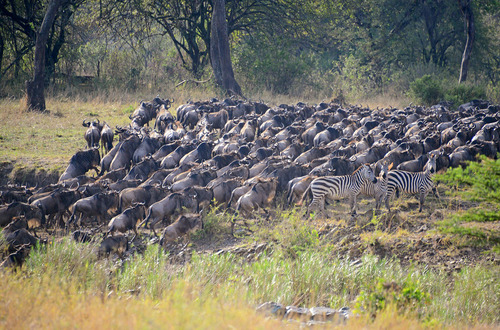 However, strong currents may sweep away weaker animals or calves. Zebras usually cross in groups and are generally more comfortable/stable in the water because of their weight and strong muscles. Eland are usually led by a dominant male. Any hesitation from him may leave the family stalled for some time. After crossing the Grumeti River, the animals rejoin their herds and shift all their energies to feeding like nothing happened.
What happens to the Carcasses? Carcasses from drowned animals are dragged downstream or left trapped in sections of the river to be consumed by vultures within hours. Park Rangers may collect some of the Carcasses for studies related to disease control and for ecological monitoring.
Crocodiles at the Grumeti River
Some of the largest Nile crocodiles in Africa call the Grumeti River home. Adults in the area may exceed 5 meters in length. It is important to note that crocodiles rarely attack the first wave of animals entering the river. They remain still, patient and buy time as they observe movement of the migrating animals. After observing that the wildebeest have crossed in numbers, they make sudden strikes. The crocodiles usually go for the neck or limb with the intention of drowning the desperate animal. When successful, submersion takes place in less than five seconds. Crocodile attacks occur mostly in sallow parts of the river (at entry or exit points). This is where most of the crossings are concentrated.
The Grumeti River Crossing and Migration Calender
It’s important to note that the migration calendar is not always predictable. Everything depends on rainfall, vegetation cycles and how congested the herd is at a particular point. It not about the month but 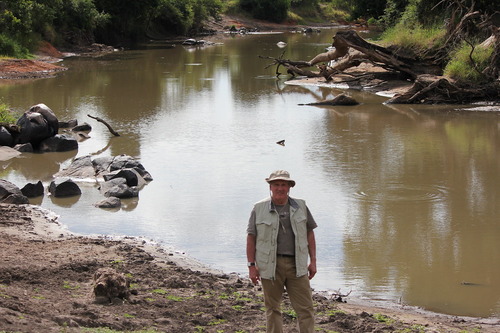 about whether there are rains. Generally, the animals begin their movement from the Ndutu and Ngorongoro Conservation Area between January and March. April finds when grass cover has declined considerably and most of the animals are heading westward to Central Serengeti. By late April to early May, the grasses in Central Serengeti also become poor due to overgrazing and congestion. The animals continue westwards and finally reach the Grumeti River. The herds reach the river in fragments or Splinter groups. These Splinter groups may cross earlier leaving behind larger concentrations to build at the main crossing points. You might want to check out this 3 Days Serengeti and Ngorongoro Safari package.
Comparing with the Mara River Crossing
How does it compare to the Mara River Crossing? The Grumeti River crossing is not as dramatic as the Mara River Crossing because there are wider areas for crossing. The Grumeti River also has gradual banks compared to the Mara River. The Mara River has deeper channels and cliff banks which lead to Mass drownings. Despite that fewer causalities (due to falls and trampling), it easier to observe predators (lions, leopards, hyenas and Cheetahs) making a kill here than at the Mara River.